














The Architecture of Ingenuity: Honoring Black Inventors as Catalysts for Global Progress

min read
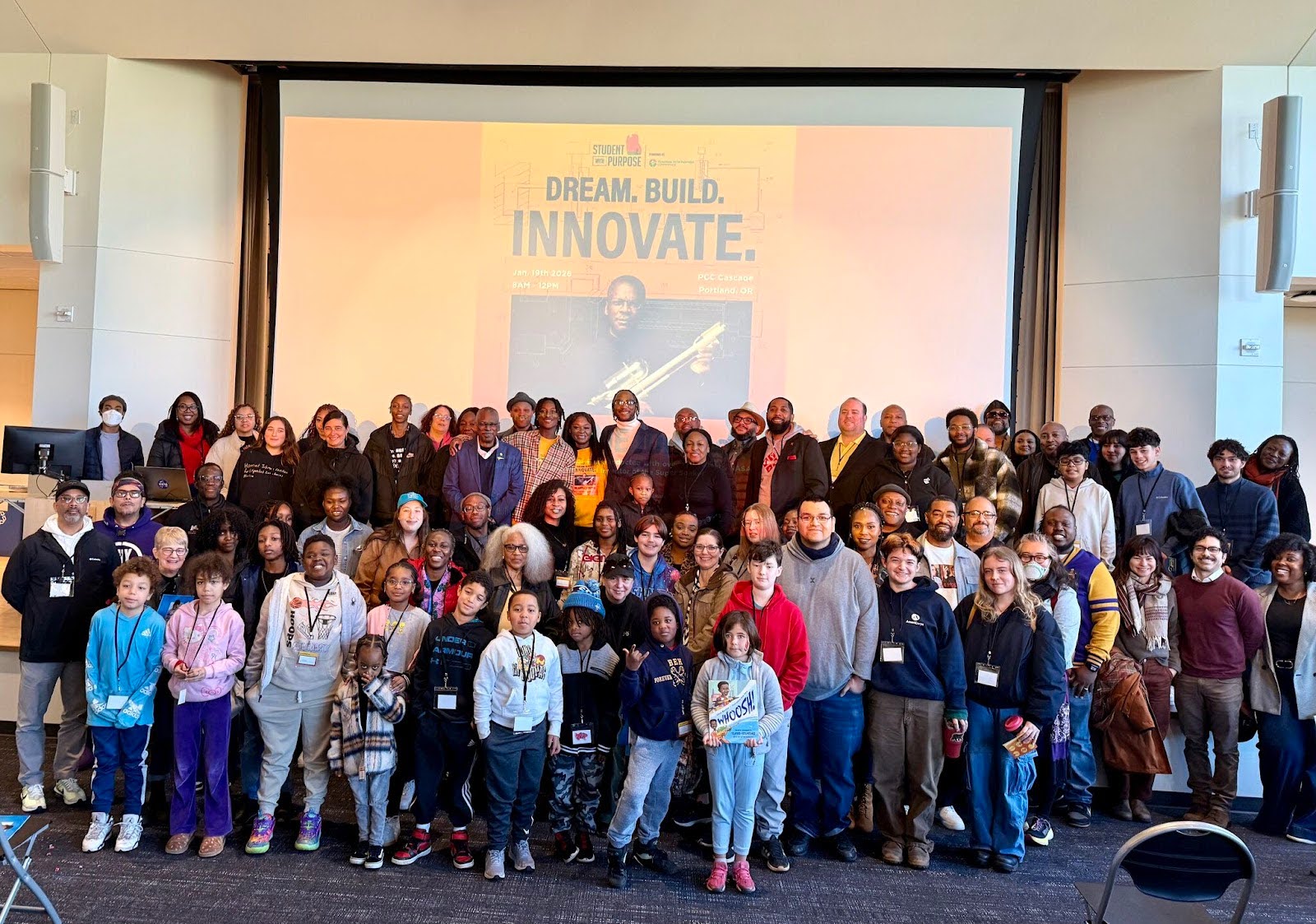
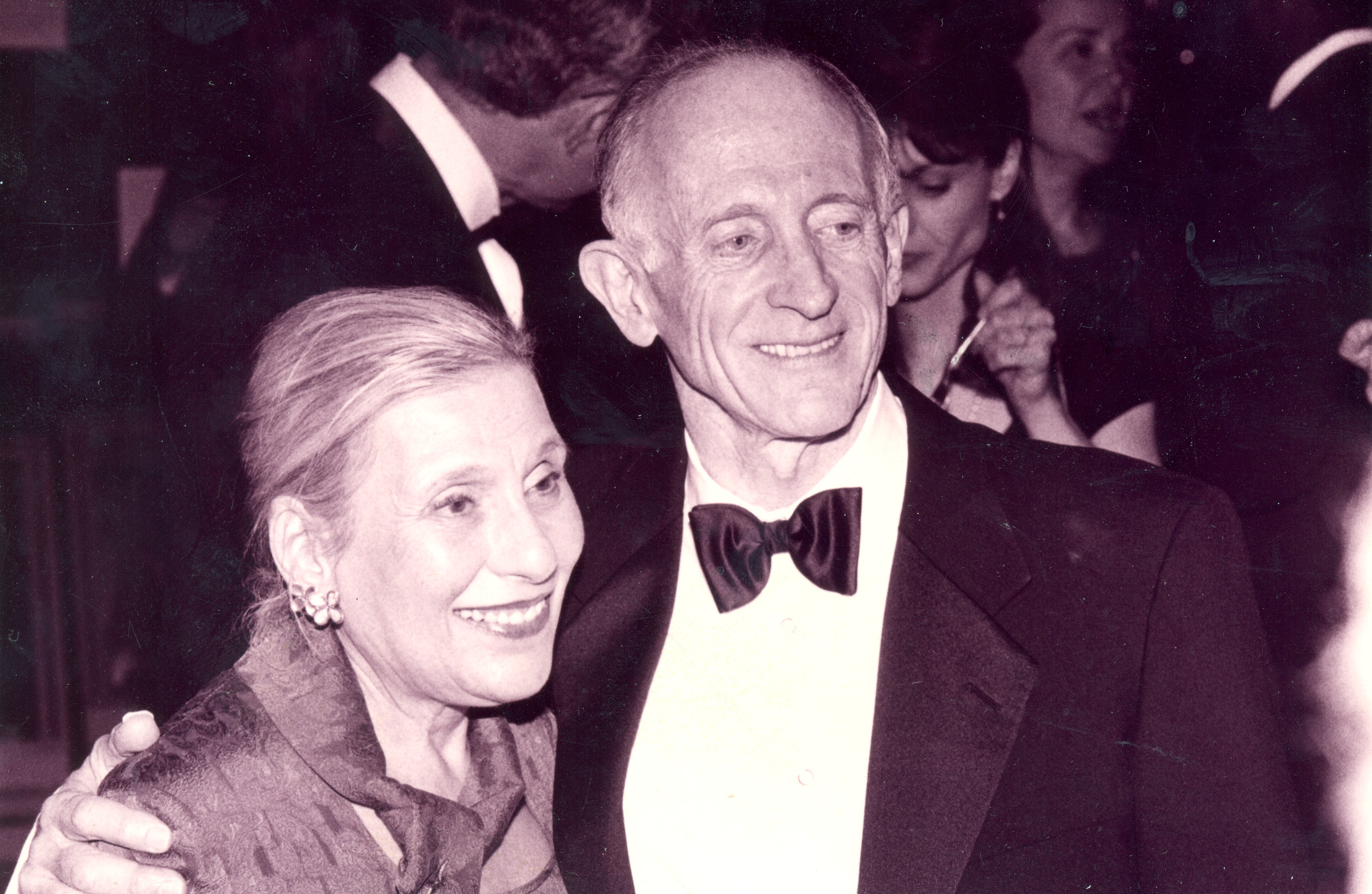
Pictured above: A group photo with Dr. Lonnie Johnson (back row) at the “Dream. Build. Innovate.” STEM celebration hosted by Teaching With Purpose at Portland Community College.
As we observe Black History Month, we find ourselves at a meaningful juncture of reflection and action. Last February, we had an opportunity to acknowledge and highlight the immense contributions of Black inventors. This year, let’s also examine the profound impact of Black ingenuity and the clear benefits of cultivating an invention ecosystem that is truly open to all.
The legacy of Black invention isn’t just a collection of isolated success stories — it’s helped form the scaffolding of modern life. From foundational patents in the 19th century to sophisticated algorithms of the 21st, Black inventors have consistently redefined the limits of what’s possible. Their stories show that groundbreaking ideas emerge from every corner of society when curiosity is met with opportunity. But, as we know, opportunity is not always equally distributed across our society — it needs to be cultivated and nurtured.
Last month, during MLK Day, I had the privilege of hearing Dr. Lonnie Johnson speak at an event here in Portland, Oregon, where he detailed his journey from a childhood spent in segregation to an adulthood that saw him work as a NASA engineer on interplanetary probes and become a world-renowned inventor.
This journey is a testament not only to Dr. Johnson’s brilliant mind but also to the importance of that brilliance intersecting with people who nurtured his talent and gave him a chance. His story also serves as a reminder for those who hope to reinvigorate today’s innovation ecosystem. Dr. Johnson emphasized that while curiosity is internal, the persistence and mindset required to overcome systemic hurdles often depend on strong support systems and visible representation.
Looking at the audience when he was speaking, and seeing the next generation of students look up to him, was an important reminder that representation in STEM is a critical component if we hope to build a 21st century innovation ecosystem that benefits all communities across this country.
Dr. Martin Luther King Jr. once noted that “life’s most persistent and urgent question is, ‘What are you doing for others?’” In his remarks, Dr. Johnson offered a simple yet transformative answer: see the greatness in them.
At The Lemelson Foundation, we strive to recognize that potential in every student, knowing that their contributions are essential to our collective future. However, recognizing potential is only the first step. We must also reflect on whether we are creating the pathways necessary for that potential to be realized.
We know that children from low-income families, people of color, and women are significantly less likely to become inventors, even when they demonstrate high mathematical ability at a young age. This disparity is not a reflection of a lack of talent, but rather a lack of innovation capital — the role models, mentorship, and informal knowledge networks typically concentrated in high-income or high-innovation environments. If not holistically addressed, this gap remains a persistent intellectual and economic drain on our global potential.
While history highlights the many obstacles Black innovators faced just to get someone to take their ideas seriously, it also provides a powerful counter-narrative of those who navigated these challenges through sheer resilience. When we celebrate figures like Thomas Jennings, believed to be the first Black inventor to receive a U.S. patent in 1821 for a method of “dry scouring” clothes, or Annie Easley, whose computer science contributions were vital to NASA’s early rocket technologies, we see the true breadth of Black invention.
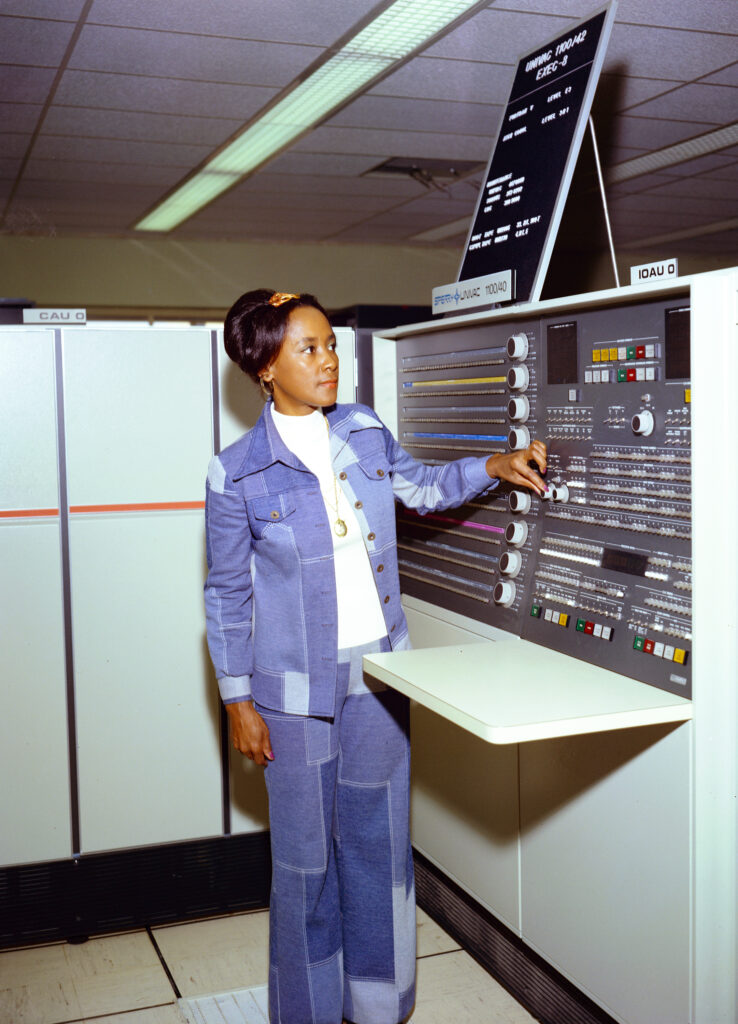


From left: Annie Easley monitors a UNIVAC 1100/40 (NASA); Bosco Kante’s ElectroSpit ESX-1; Aisha Bowe’s LINGO Earth Observer STEM Kit.
These contributions continue into the present day with innovators like Bosco Kante, who invented the ElectroSpit ESX-1 mobile phone-enabled talk box, and Aisha Bowe, whose company, LINGO, supports kids learning code and STEM. Their work serves as a powerful reminder that Black ingenuity is not merely a historical artifact, it’s a contemporary force pushing the frontiers of health, industry, and communication — among so many others. The success of these individuals provides powerful validation for the high-aptitude Black talent that exists everywhere in this country. However, as an organization focused on strengthening the supporting systems that allow invention to thrive, we recognize that relying on individual resilience to overcome a lack of resources is an inefficient model for progress.
Our Strategic Commitment: Dismantling the Barriers to Entry
The Lemelson Foundation, guided by the ethos of our founder, Jerome “Jerry” Lemelson, recognizes that an invention is only as powerful as the ecosystem that supports it. Jerry, a prolific inventor himself, believed that invention was the primary engine of economic and social progress — but he also understood that this engine requires a complex infrastructure of education, legal protection, and investment to function.
To honor Black History Month is to commit to the rigorous work of inclusive system design — the intentional restructuring of that infrastructure to ensure it includes Black talent. Our commitment prioritizes:
- Scaling Access to Invention Education: Since childhood exposure is the primary predictor of innovation, we are working to embed invention education in underserved school districts, ensuring Black youth — and all youth of color — are architects of technology, not just users.
- Correcting Capital Disparity: We address the “funding gap” that sees Black entrepreneurs receiving a mere fraction of venture capital by supporting “patient capital” models and incubators for hardware and physical-product inventions, which face higher barriers to entry than software.
- Restoring Agency: We are designing an inclusive future by amplifying the stories of Black inventors that effectively provide the “proof of concept” that encourages institutional investors and policymakers to see this community as the high-impact sector it is and has always been.
By focusing on the ecosystem rather than just the individual, we honor the legacy of Jerry Lemelson and the generations of Black inventors who paved the way. Our goal is to build a more inclusive path forward, ensuring that brilliance from every community has the support it needs to thrive.
While February offers a dedicated space for reflection, The Lemelson Foundation’s celebration of Black brilliance is not confined to a single month. We commemorate this history as a blueprint for a future that we actively build every day — a future where the freedom to create is a universal right, and invention serves as a permanent force for the greater good.

Important Disclaimer: The content on this page may include links to publicly available information from third-party organizations. In most cases, linked websites are not owned or controlled in any way by the Foundation, and the Foundation therefore has no involvement with the content on such sites. These sites may, however, contain additional information about the subject matter of this article. By clicking on any of the links contained herein, you agree to be directed to an external website, and you acknowledge and agree that the Foundation shall not be held responsible or accountable for any information contained on such site. Please note that the Foundation does not monitor any of the websites linked herein and does not review, endorse, or approve any information posted on any such sites.