



Transforming the Philanthropic Landscape for STEM
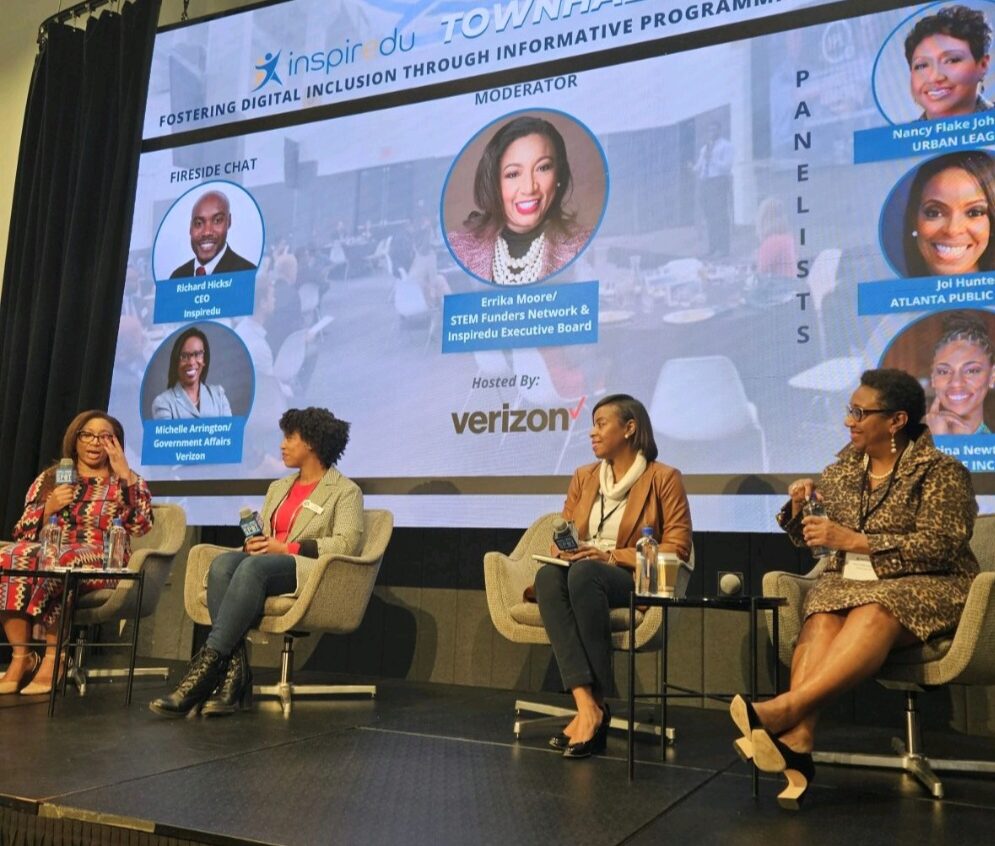
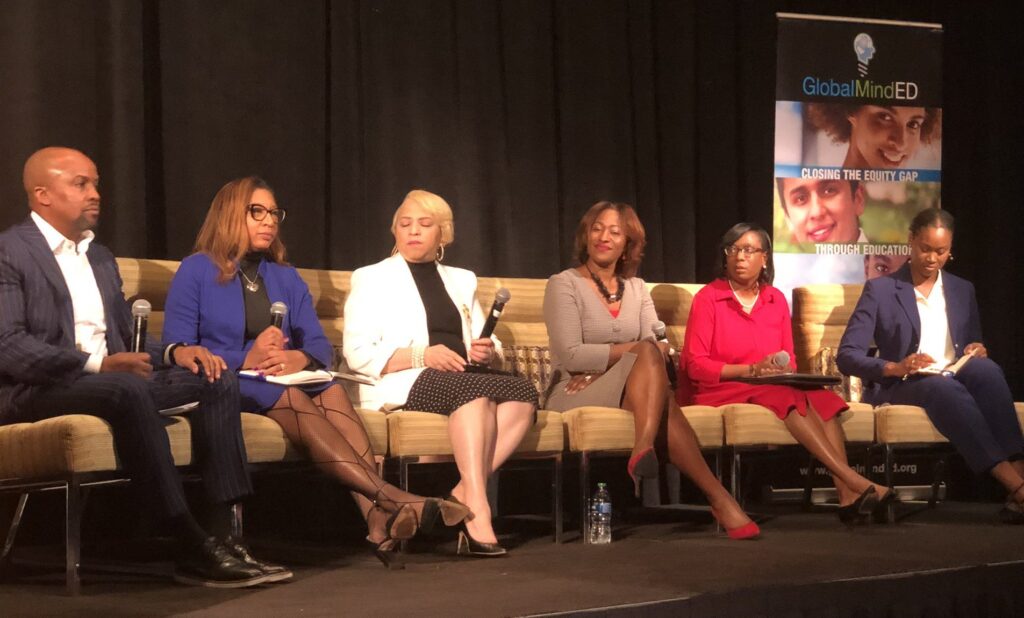
Pictured above: Moore (far left) moderates a panel on “Fostering Digital Inclusion Through Informative Programming and Partnership” at the Inspiredu Town Hall.
This former engineer is helping funders focus on making STEM accessible to all students
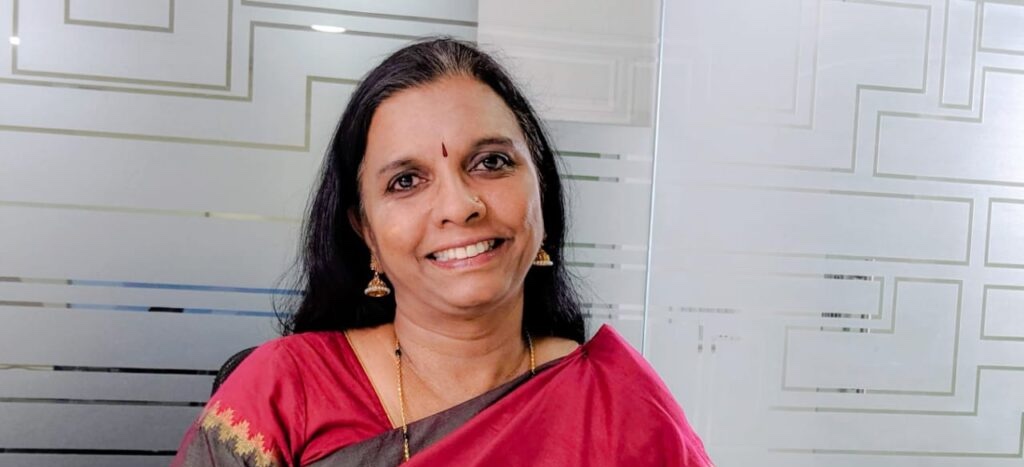
It was a comment from an engineering professor in college that inspired Errika Moore to ensure that STEM fields would be accessible to all.
“I went to see my professor during his office hours, and he told me that Black women had no business in engineering,” she explained.
More than 30 years later, Moore still recalls that transformational meeting as a key motivating influence in her career. “This was no longer about just me graduating in engineering — this was about other Black women graduating in engineering, and all of my community,” she said.
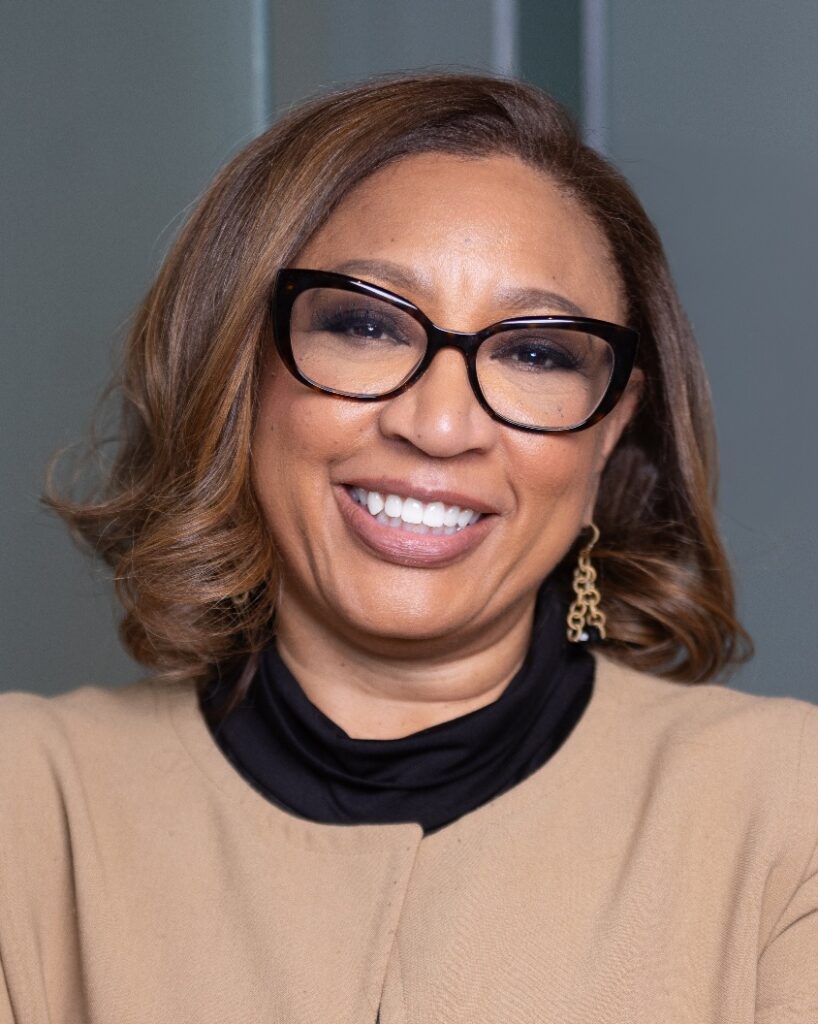
She graduated from Georgia Tech with a degree in Industrial Engineering, worked in various corporate roles, and then shifted to the nonprofit sector focused on education. For the past five years, Moore has served as Executive Director of STEM Funders Network, which is working to transform the philanthropic ecosystem to expand access to STEM learning opportunities for historically marginalized groups. The network creates strategic partnerships and investments in STEM programs and activities that support students from cradle to career.
Currently, Moore is also pursuing a PhD in Sociology at her alma mater, which informs her work on STEM equity. We recently spoke with her about the current STEM landscape, her personal motivations to do this work, and where she sees the changing role and opportunity that philanthropy can play.
This interview has been edited for length and clarity.
Tell us about your own career journey, from the corporate world to your role as Executive Director of STEM Funders Network.
For me, this current role has been a full circle moment. I was trained as an engineer at Georgia Tech, went into some corporate roles with IBM, BMC Software, and Southwire, but then made the transition in 2012 into nonprofit leadership — and really decided that’s the space where I wanted to give and to serve around STEM education.
I was blessed for the journey that I had, and having earned the degree that I was able to earn, but I recognized statistically, I was still an anomaly, and that didn’t sit well with me. So the question was: How do I make a difference? As the Executive Director for the STEM Funders Network, it’s enabled me to take my account executive background, marketing background, the degree I earned, working for nonprofits, and bring all of that forward into a space and community to focus on philanthropic transformation.
How did you become interested in engineering? Who or what were your early influences?
I always start with my parents — not because they were engineers or because they encouraged me to pursue engineering, but because they encouraged me to do whatever I felt I wanted to do. They gave me the broad brush, they didn’t pigeonhole me, they didn’t identify what we traditionally do. We had nobody in our family who were engineers when I decided to pursue it in 1990.
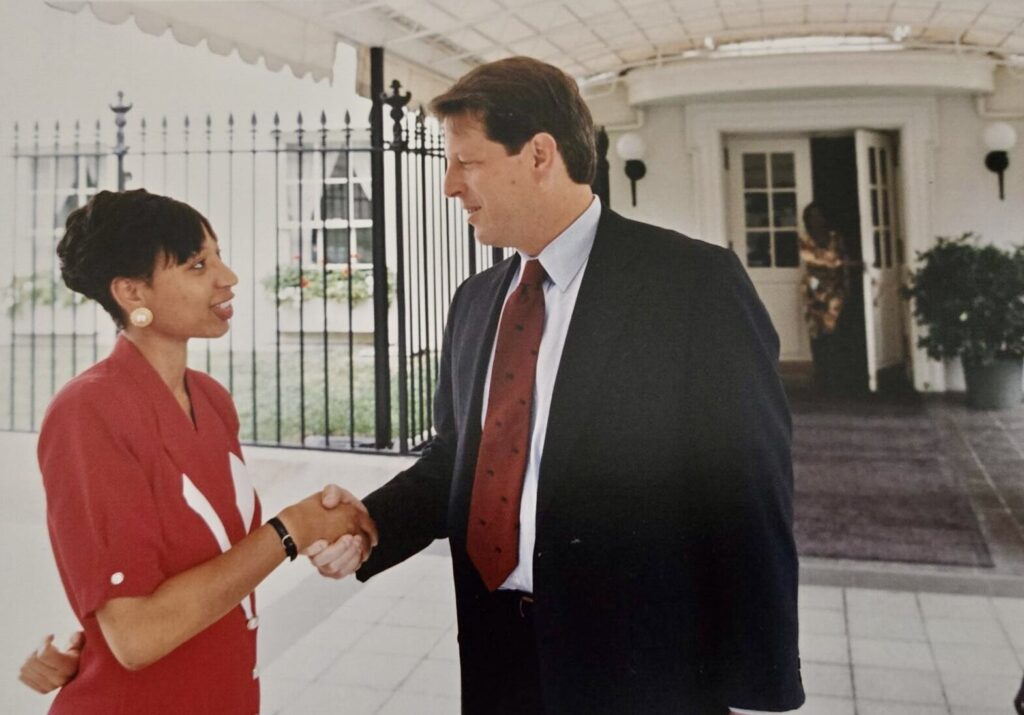
I also had an opportunity to intern at the White House in the 1990s with Vice President Gore’s Advance and Scheduling staff. So if you’re wondering what in the world does that have to do with engineering, it was about optimization and spatial planning — and all of that on steroids. I absolutely fell in love with the experience, and I came back to Georgia Tech after that summer and I discovered that industrial engineering did that. So I thought, “This is for me!”
Tell us what is unique about STEM Funders Network.
I always tell people it’s not a grant-making entity — it’s more like a professional learning community. This is a place where we can learn and evolve with peers, and also through the biannual convenings that we host. There we bring in subject matter experts who are basically the nonprofit leaders who are doing the work — they have the feet-on-the-ground and the constituency. When I came into the Network I talked about wanting to really encourage this to be an organization that stood fast and firm around philanthropic transformation, and I appreciated that they welcomed that and have leaned into it.
Who are the different types of funders in the Network and what unites them? Also what do they bring that’s unique or different amongst each other?
I usually describe it as “gumbo.” In gumbo, you’ve got okra, you’ve got tomatoes, you’ve got shrimp, you’ve got sausage, you’ve got all these different things. It comes together and it’s fabulous. But you also need the right foundation ingredients.
For the Network, it’s having a common interest in doing things differently, doing things better, and focusing on high-impact philanthropy. Those are the types of things that bring partners together into this space. Some might have a national or even an international footprint, others are very place-based and specific to just a city, maybe a state. They have very different profiles and their giving amounts also look different. But here’s a space where they can come and say, regardless of our differences, regardless of our partnership strategies, we can find answers.
What innovations are you seeing coming out of Network members?
Some of the more innovative types of scenarios that have occurred go back to 2020. Things like changing what their grant applications look like. Applications became smart, empathetic, and more realistic. It’s more about: let’s create an application that makes sense, where what you put in this application will actually come back and benefit you. It’s not just a data capture, and let’s definitely not capture data that we know we’re not using.
Another innovation was not just focusing on programmatic funding and dollars, but also thinking in terms of general operating support. Let’s give you money that you can use, and you know how to use it. We should not be prescribing to you. It may seem basic, but at the end of the day, it’s innovative when it’s different to your philanthropic organization. And what I love is that people are seeing the impact it makes when you have a different approach.
Given the landscape’s many changes in the past few years, has STEM Funders Network’s message and approach changed?
I’m proud to say the message has not changed. If anything, we’ve doubled down on our messaging and focus. But we think about how you engage differently, how you think sustainably five, 10 years out because that’s how far ahead your strategic grantee partners need you to be thinking.
In 2023, I was forewarning our funders at our Spring Biannual, “I need you to pay attention to what’s happening legislatively — not just at a federal level, but because many of you are place-based, what’s happening in your states?” For some, this isn’t the space that they normally tread in, and having to realize that a part of philanthropic transformation is embracing and encompassing all the things that get associated with it.
Equity can’t happen if policy and advocacy aren’t part of the conversation and a part of the equation. Using your voice to influence public policy is mission critical to creating opportunities for all because there are so many decision points where policy is made, everything from legislators to state superintendents.
This is about how you show up. This is about how you give access to your circle of influence with other funders. But those conversations are difficult if that’s not something that has been traditional to an organization. I’m the kind of person who runs to the fire versus running from the fire, and I feel blessed and honored to be able to serve in this capacity with the funders that are in this Network.
You know personally and professionally that STEM can be transformational, not only for individuals, but for whole families. Please tell us more.
When you look at the types of roles and opportunities that exist when someone pursues a STEM education and a STEM career — what they gain financially — it can change the trajectory of not just a student, but there can be a generational perspective. I am studying it now from the standpoint of the sociology of STEM education because I recognize it can create a paradigm shift.
I’ll give an example. There was a student at a nonprofit that I worked for. He was a valedictorian of his class at an all-male Black high school. He was selected for a fully funded undergraduate scholarship in engineering and recognized as a Gates Millennial Scholar. His parents did not want him to go because he would be leaving home. The conversation we had was with his parents — including a recognition of his being a part of the nucleus of the family, but also the influence that his journey might have on his younger siblings, and thus the generational effect that it could have from an economic mobility standpoint.
When we talk about what STEM can do, I thread economic mobility into this to cover the diversity of portfolios of our funders. If you’ve got a funder that’s K-8, and then you’ve got a funder that’s secondary to post-secondary, or secondary to workforce, and they’re feeling like they’re segmented, what’s the common thread that can show it doesn’t matter if you’re downstream or upstream on this continuum?
If you’re all focused on economic mobility in what you do, then we’re making a transformational difference. It’s trying to find a common language that Network members can all relate to, and economic mobility is absolutely a part of the conversation.
How do you describe to people the importance of having people from different lived experiences and backgrounds in STEM fields contributing to innovation through their own experiences, and solving problems for their own communities or interests? And how does STEM Funders Network fit into this space?
One example: because we didn’t have women as a part of the design factor for seatbelts for years, seatbelts were not designed for women. And we’re less than five years since they started using female models as a part of the crash testing.
It takes all of these different experiences to be a part of a conversation and to be a part of a design process — and to think through all who are being impacted.
In 2024, we had a conversation around what is a through line that we could all focus on as an organization. And we landed in the space of: If we are intentional in focusing on marginalized, underrepresented, and under-resourced communities, then the reality is we will be making changes that actually will impact everyone. If we do things that improve, enhance, change, give greater access and opportunities, then ultimately everybody’s going to benefit from that.
You’ve spoken about the importance of storytelling and STEM. Tell us why that’s crucial for funders to focus on — and through that lens, what would the story of your own journey be?
There needs to be an increase of storytelling that comes from philanthropy. We put so much of the onus of that on the nonprofit organizations. And the reality is, if a philanthropic organization is going to stand in the fight with our partners, then one of the ways to show up is to tell the story.
My story would be someone who has worked to be a change agent all of her life. I go back to the influence of my parents. They encouraged and supported me early, being involved in different organizations like Urban League or the NAACP or through my church, to be unafraid and unashamed about showing up and fighting. And being a change agent, and being a disruptor — ideally a disruptor for good, but a disruptor, nonetheless. And that has been me as long as I can remember.
I live by a mantra, Angela Davis’ words: “I’m no longer accepting the things I cannot change. I’m changing the things I can no longer accept.” To me, those are powerful words, and I feel like they represent who I am and how I try to show up on a regular basis. That would be my story.

Important Disclaimer: The content on this page may include links to publicly available information from third-party organizations. In most cases, linked websites are not owned or controlled in any way by the Foundation, and the Foundation therefore has no involvement with the content on such sites. These sites may, however, contain additional information about the subject matter of this article. By clicking on any of the links contained herein, you agree to be directed to an external website, and you acknowledge and agree that the Foundation shall not be held responsible or accountable for any information contained on such site. Please note that the Foundation does not monitor any of the websites linked herein and does not review, endorse, or approve any information posted on any such sites.