










Oregon’s Big Bet on Climate Innovation
By Kory Murphy, Program Officer, The Lemelson Foundation
How do we ensure that climate solutions create shared prosperity?
When it comes to facing the climate crisis, Oregon is being squeezed from two sides.
On one side, climate impacts like extreme heat, wildfire, and failing infrastructure are landing hardest on the communities with the least power to shape the response.
On the other, too many promising ideas and climate technologies created in Oregon are stalling before they can scale.
We have the talent, research, and entrepreneurial energy in Oregon to be a national leader in climate innovation, but we’re failing to capitalize on it. And we’re also failing to ensure that innovation and new technology benefits all of our communities.
That failure is not about a lack of ideas. It is about how we organize power.
Oregon does not need another round of hype or a miracle technology to save us. It needs institutions, investors, and civic leaders willing to align capital, infrastructure, and community leadership behind climate solutions that can actually grow.
That is why climate innovation is not a side issue for Oregon; it is our economic test.
A global net-zero transition measured in the hundreds of trillions is already reshaping markets in energy, buildings, materials, and resilience. Oregon has real advantages in mass timber, renewables, and clean-tech talent. The question is whether we will keep admiring those strengths — or finally build the trust, ownership, and coordination to turn them into a more resilient and widely shared economy.
We in the philanthropic world have to stop playing small and truly collaborate to secure Oregon’s economic future — including the strategic pooling of resources, shared risk, and a unified vision to bet big on our state.
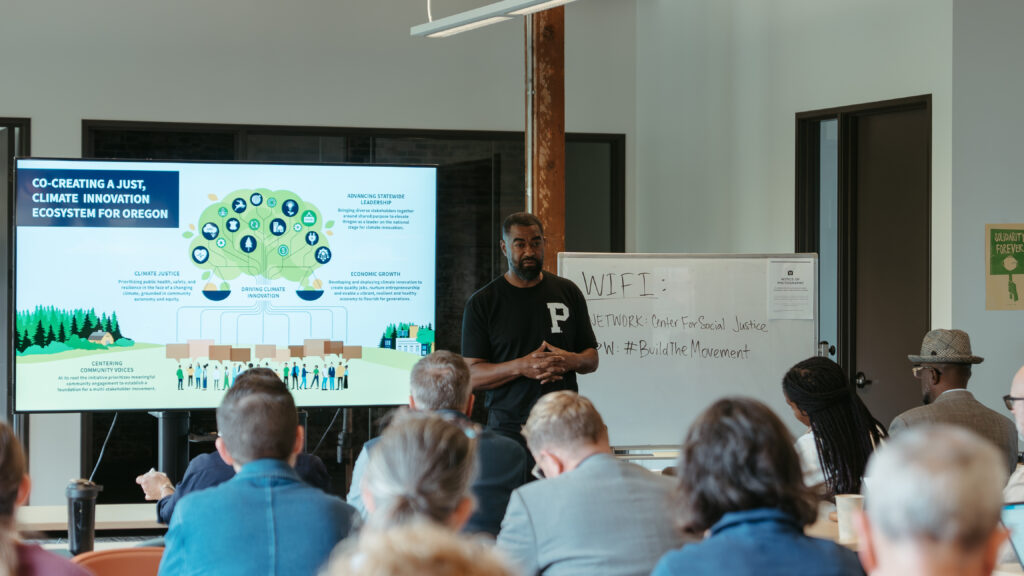
(Christian Zavala at Millennial Reach Agency)
The Real Bet: People Over Products
The temptation in recent times has always been to bet on the technology. Invest in this solar panel! Fund that carbon capture project! And sure, that worked … for a time.
But what if Oregon’s biggest climate bet was on our people and communities who power innovation every day?
We have the strongest R&D in mass timber and renewables. We have 14,000 clean tech workers. But our structural gaps — the workforce shortages, the capital flight, the infrastructure bottlenecks — they’re all symptoms of a single, deeper societal illness: a community-informed leadership gap. People of Color, rural, and frontline communities are the experts in their own needs, yet they are often excluded from the investment and ownership decisions that shape their future.
That’s where the hard work begins. It’s easy to talk about impact, but building an actual, inclusive ecosystem is a heavy lift that requires expertise in collaboration and systemic design.
Recently, The Lemelson Foundation invited the innovation firm SecondMuse to help us consider what’s possible in Oregon. This strategic partnership was forged because we recognized that if we want systemic change, we need experts in building equitable innovation ecosystems. SecondMuse’s mandate is clear: facilitate a multi-stakeholder effort that starts with deep listening.
We brought them in specifically to help us shift the focus from traditional grantmaking toward co-designing the systems, including the networks, the capital flows, and the shared strategy that truly unlocks the potential of all Oregonian innovators and entrepreneurs. Our partnership ensures that this initiative, called the Oregon Climate Innovation Ecosystem, is community-driven, statewide in reach, and grounded in a commitment to justice and economic revitalization.
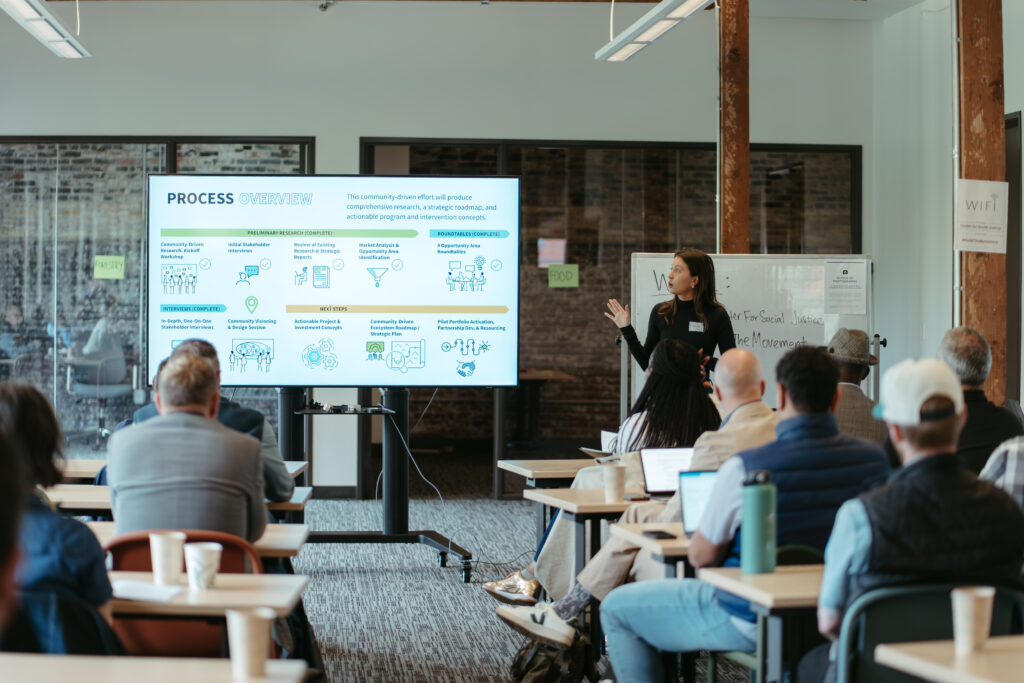
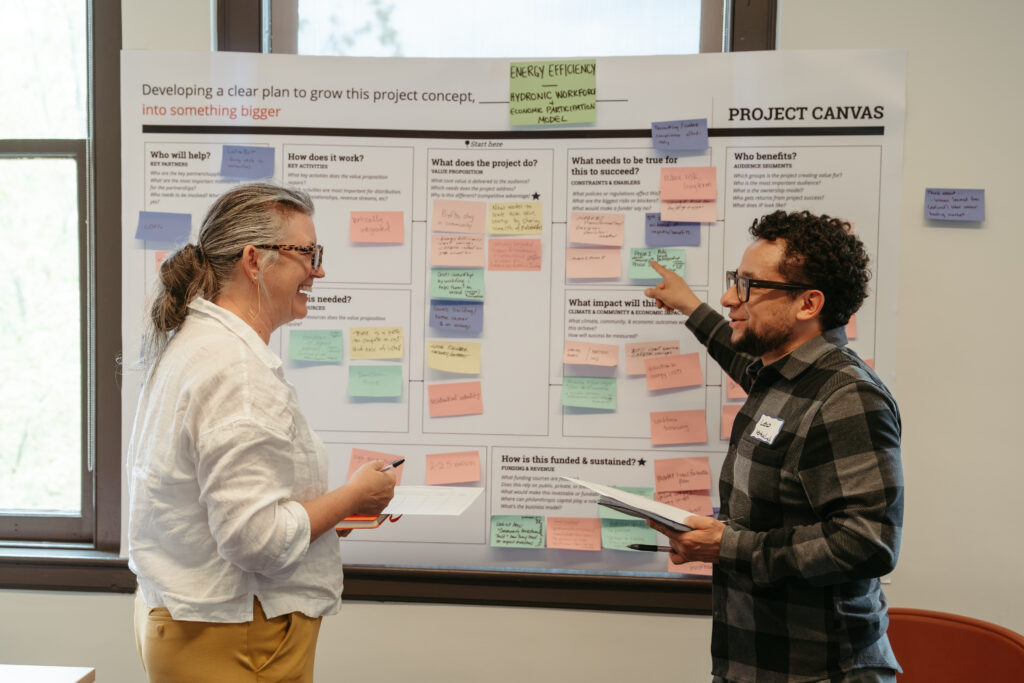
Sessions and group discussions at the 2026 Oregon Climate Innovation Ecosystem (OCIE) Community Design Session.
(Christian Zavala at Millennial Reach Agency)
This initiative isn’t about building a new thing or reinventing the wheel. It’s about being real about what’s not working (fragmented hubs, capital gaps, exclusion) and strengthening what’s already working (local innovators, existing community solutions, bold policy foundations). Then, and only then, do we collectively identify and fill the gaps.
Through this work, we have identified four key opportunity areas where Oregon can lead, including sustainable forestry, clean energy, building retrofits, and food and agriculture. These are real areas where people are already building, testing, and pushing forward — and areas with a need for stronger enabling ecosystem infrastructure.
Ownership is the Key to Unlocking Power
We need to shift the conversation from inclusion to ownership.
If we truly want this climate economy to be resilient, we must enable community ownership of energy and innovation infrastructure — the land, the space, the equipment, the intellectual property, literally everything plus the kitchen sink. When communities own the means of climate innovation — like the Black and Indigenous Ecodistricts envisioned by the Kijani Collective — the wealth stays local, the solutions are culturally relevant, and the resilience is baked in. It’s not charity; it’s sound and strategic long-term economic development.
The only way to solve the three big barriers to investment that plague Oregon is through trust, risk, and coordination. When communities trust the process because they own the results, the risk decreases. When philanthropy and investors see a clear, community-vetted strategic roadmap, coordination becomes possible.
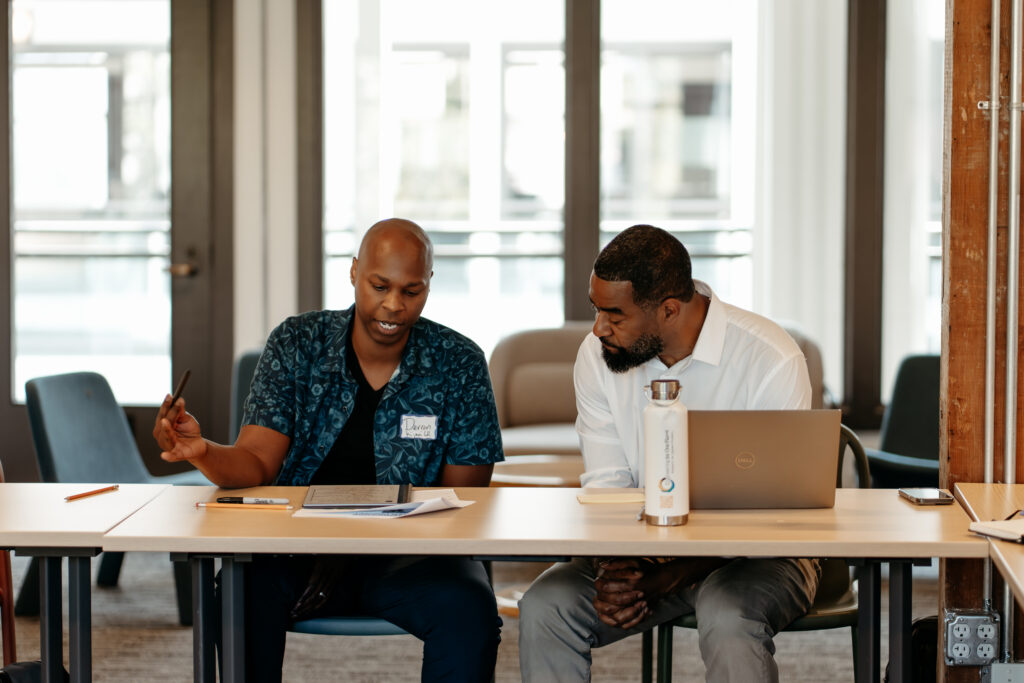
(Christian Zavala at Millennial Reach Agency)
The Power of Love and Justice
Yes, this is big and may be even daunting for some of us, but it has to be. Nothing less than a full, sustained commitment to all people and all communities will cut it.
This will require investment of some kind from everyone — time, policy alignment, expertise, and capital — but the roadmap we’re building is intended to be a magnet. It has to be attractive enough for others to invest in, including local, regional, and national partners, venture capitalists, and local, state, and federal agencies.
We are guided by a deep understanding of power and justice. As Dr. Martin Luther King Jr. reminded us: “Power without love is reckless and abusive, and love without power is sentimental and anemic. Power at its best is love implementing the demands of justice, and justice at its best is power correcting everything that stands against love.”
This is about using the power of our collective capital to implement the demands of justice in the face of the climate crisis. It’s about ensuring the new Oregon economy is built on a foundation of love — for people, for the planet, and for the shared prosperity we all deserve.
So let’s be bold and audacious enough to leverage serious power, but disciplined enough to ensure that power is only ever spent to deliver true justice and shared prosperity. That alignment is the whole ballgame.
If we get real about collaboration, justice, and ownership, Oregon won’t just keep up. We will lead.