













A Birds-Eye View on Derisking Funding for Social Impact Entrepreneurship

The innovative financing journey of this agricultural startup in India demonstrates a path to unlocking sustainable growth and impact at scale
Social impact entrepreneurs in India are working to bring new technology to small-holder farmers to help make agriculture more efficient and more profitable — and more sustainable and climate-smart in the process.
For every startup success story, there are many failed attempts, despite real progress in cultivating an agriculture technology ecosystem that supports these kinds of enterprises.
But there are also clear lessons for Entrepreneur Support Organizations and capital providers on how to better support these companies, as well as for funders about new strategies to promote ecosystem development.
One success story is the company BharatRohan, which is literally providing a new perspective for farmers through the use of drones.
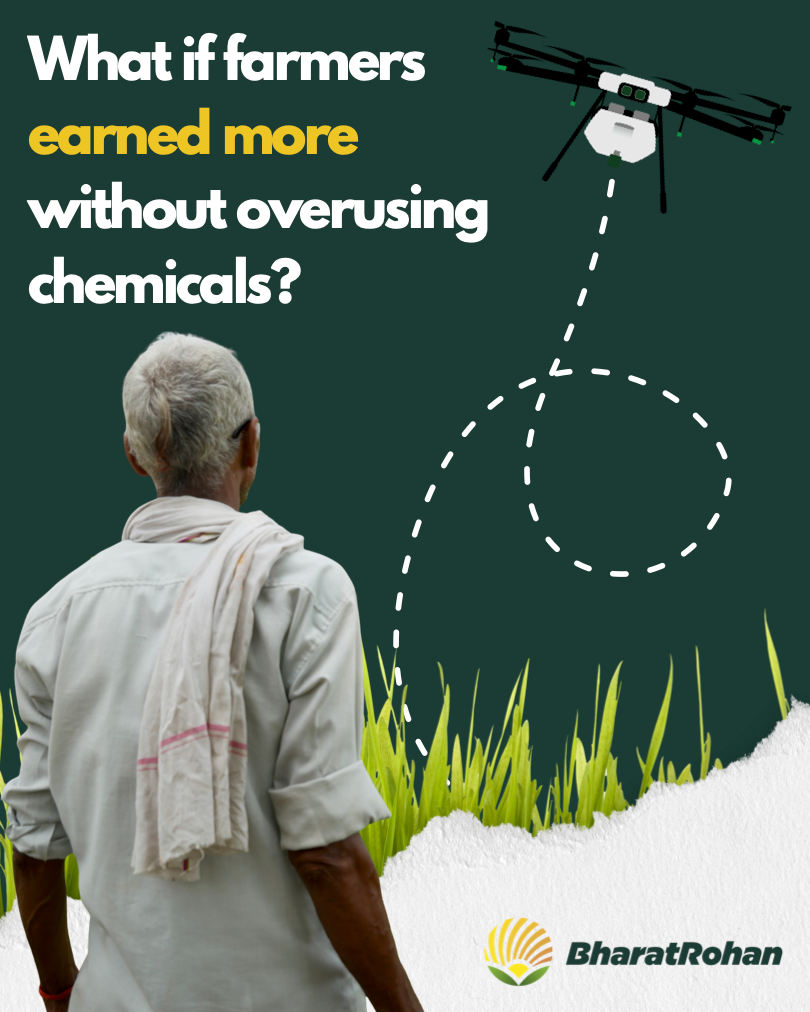
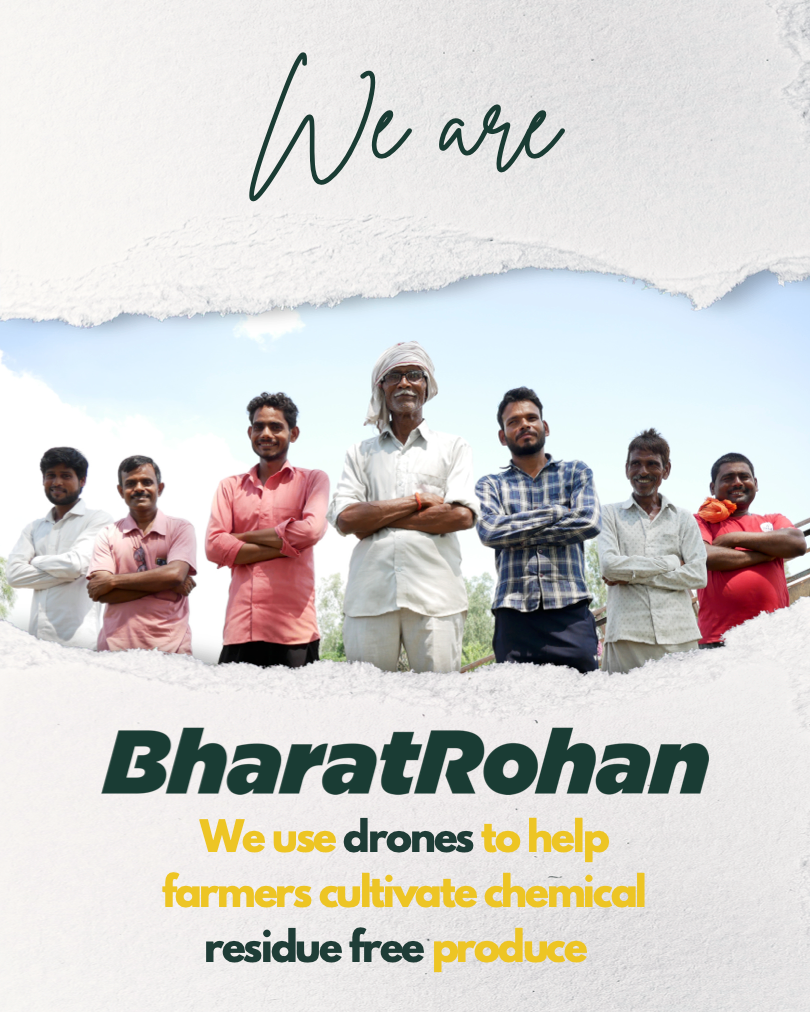
BharatRohan’s fleets of Unmanned Aerial Vehicles regularly fly above farmers’ fields and use hyperspectral imagery to help them gain in-depth understanding of their land and crops. Fueled by AI, the company transforms this footage and data into detailed reports for farmers and communities — which helps them make decisions like where to apply targeted herbicides, where to provide more nutrients or water, and ultimately when to harvest for the best yields. They also provide confidence to larger agribusinesses for procuring safer, better, and traceable produce for their customers.
BharatRohan is achieving impact at scale, serving more than 58,000 farmers across more than 260,000 acres in India. It’s improving livelihoods for small-holder farmers, while also protecting the environment and encouraging climate resilience.
Its successful model should have been a sure investment for funders looking to make both impact and profit. But this promising company almost failed to fully launch. And it’s not because BharatRohan’s technology or model didn’t work. It’s because of a more structural financing issue in this sector: traditional lenders weren’t able to appropriately calibrate risk for impact-first businesses.

A BharatRohan drone flies over farmland. (BharatRohan)
Most early-stage social enterprises like BharatRohan face challenges in accessing capital beyond grant funding, and are left with few options to access debt for growth. Traditional lenders require profitable accounts and collateral that these enterprises often lack — and things like thin credit history and unpredictable cash cycles can make them appear too risky to potential lenders.
That’s why entrepreneur support organizations like Villgro and the Inkludo Impact Foundation are helping to de-risk lending through guarantee mechanisms and other innovative financing options that can unlock traditional loans.
In BharatRohan’s case, the company urgently needed working capital funded by timely debt to fit their unconventional business cycle driven by the farmers and agribusinesses they serve — but they had been turned down by multiple lenders.
In 2021, Villgro and Inkludo stepped in to fill this gap by providing a first-loss portfolio guarantee structure. This gave confidence for the impact investing firm Caspian Debt to provide a relatively small but crucial loan of $30,000.
Villgro’s track record in incubating high-quality social enterprises also gave Caspian the confidence to lend within 10 days — far faster than standard credit processes. The loan to BharatRohan was collateral-free, and was structured to fit the enterprise’s actual cash cycle, not a lender’s standard template.
This timely intervention made all the difference. It helped BharatRohan fill its financing gap — but it also led to essential follow-on funding from other sources. Six months after Caspian’s loan, BharatRohan received a loan of $180,000 from another funder without a loss guarantee. In 2023, they received $720,000 in commodity-backed collateral loans. In 2024, they received a $2.24 million equity investment, and in 2025, they were listed on India’s BSE SME stock exchange, a dedicated segment of the Bombay Stock Exchange (BSE) where Small and Medium Enterprises (SMEs) can raise capital through an Initial Public Offering.
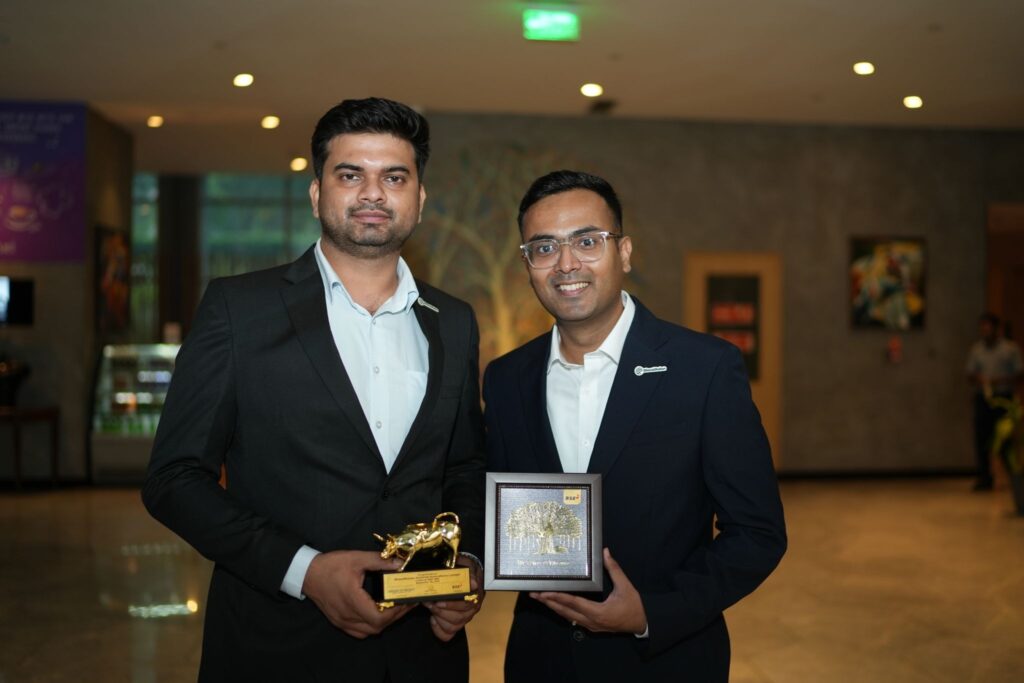
BharatRohan’s Whole Time Director and Chief Technology Officer, Rishabh Choudhary, left, and MD and Chairman, Amandeep Panwar, at the Listing Ceremony of BharatRohan Airborne Innovations Limited at BSE in September 2025. (BharatRohan)
BharatRohan’s journey went from being turned down repeatedly for loans to experiencing nearly 50 times revenue growth in five years, resulting in significant follow-on financing and eventually a public listing.
The lesson for the sector is that the risk wasn’t in BharatRohan — it was in the absence of a mechanism for lenders to price that risk appropriately. The first-loss guarantee provided by Villgro and Inkludo solved that issue.
But beyond just introducing a financial product to address the startup’s current need, they also addressed the broader systemic issue. They asked the crucial question of how their support could actually shift lending practices for Caspian and others so that debt becomes more accessible to social enterprises over time, without the need for this type of first-loss guarantee.
And so this story is not just about an innovative drone company succeeding in its mission to make agriculture in India more sustainable for farmers and the environment. It’s about changing the model to unlock debt for more of these social impact entrepreneurs, and ultimately providing the funding mechanisms for them to achieve impact and improve lives and livelihoods at scale.
Learn more about this model pioneered by Villgro and the Inkludo Impact Foundation here.