




Envisioning the Future of Accessibility with AI
min read
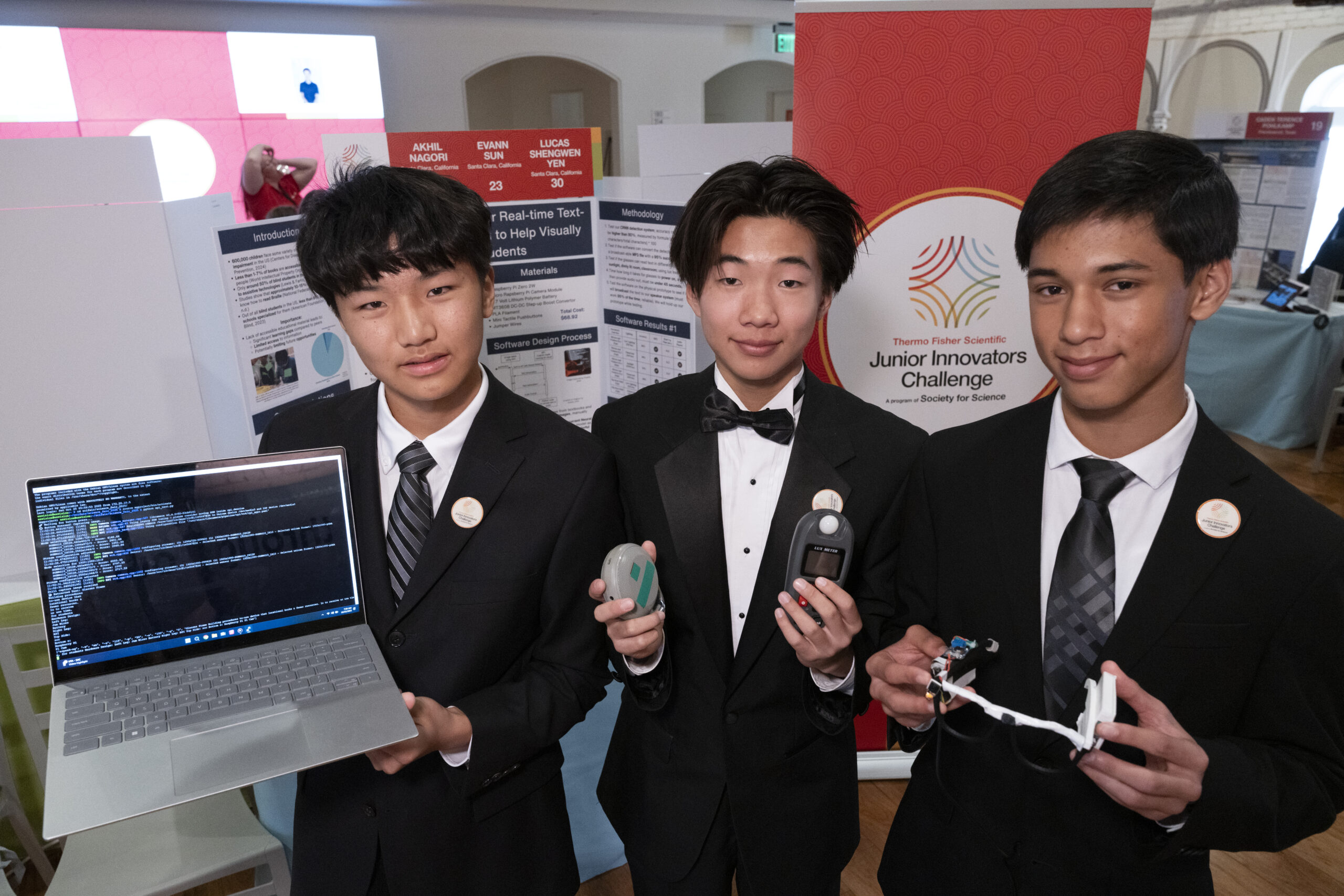
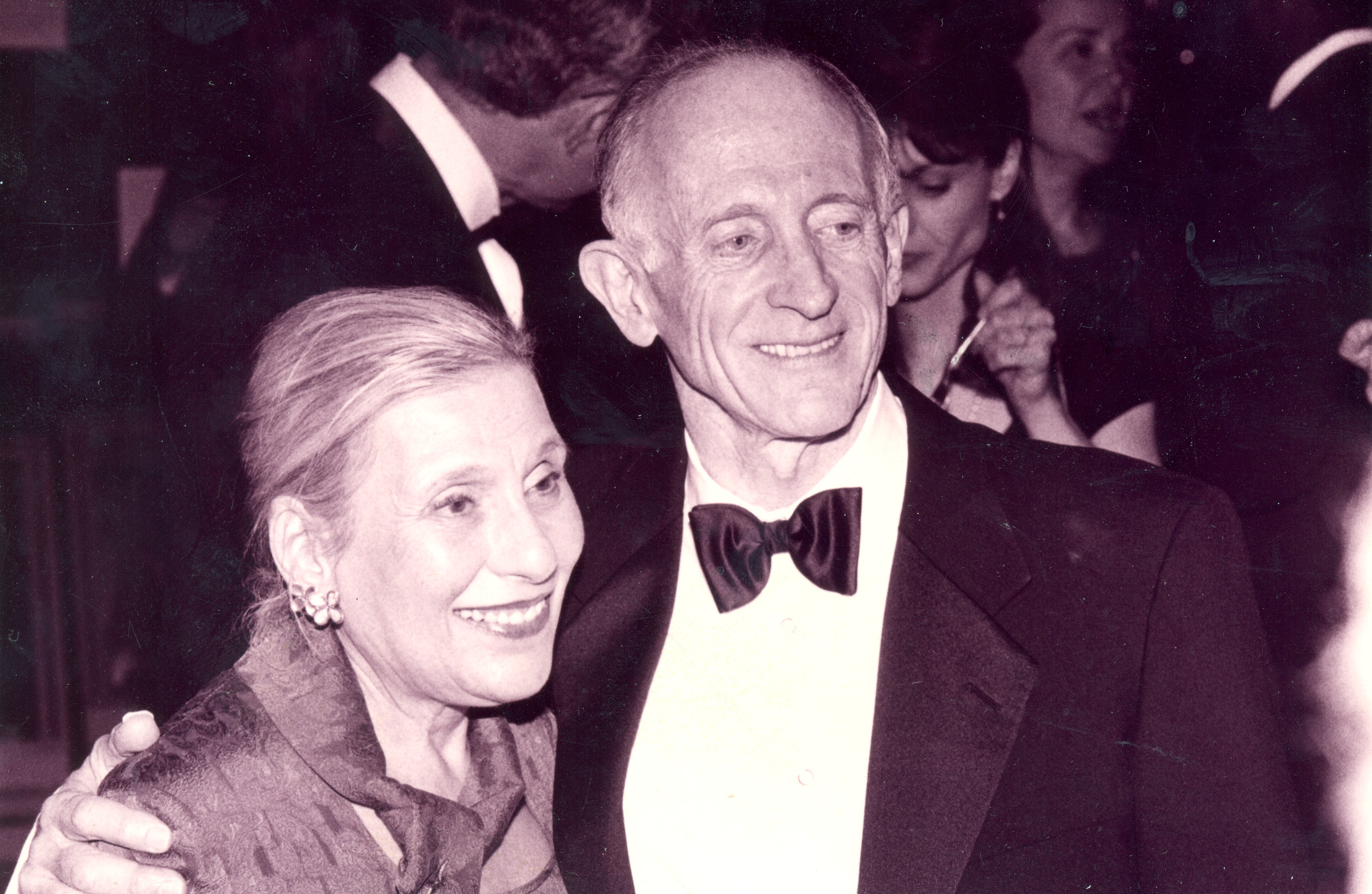
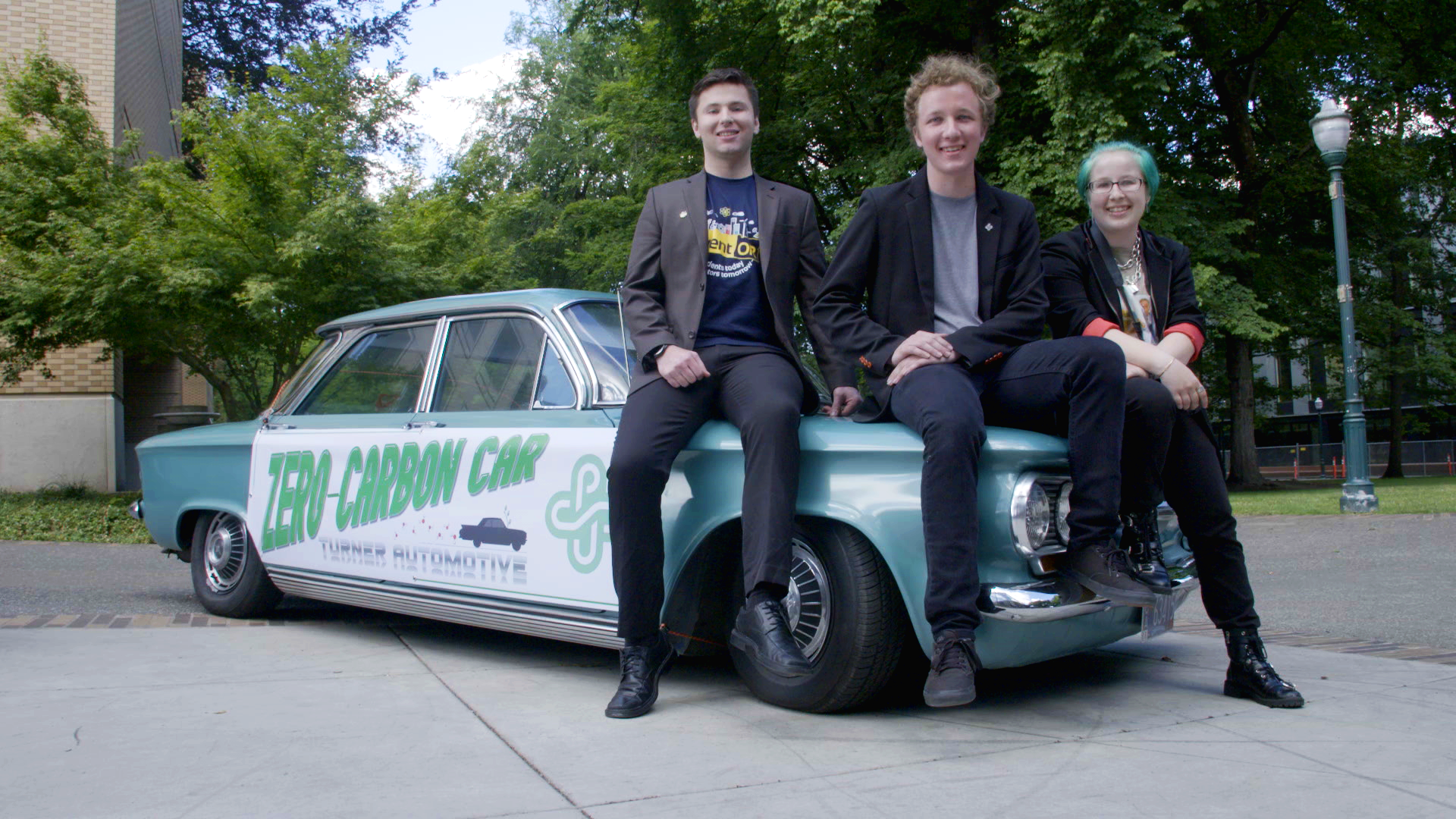
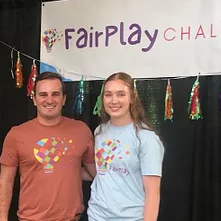
Pictured above: Teammates Evann Sun, Lucas Yen, and Akhil Nagori. Photo courtesy of Lisa Fryklund/Licensed by Society for Science.
These young inventors are harnessing AI to create affordable text-to-speech glasses for visually impaired students.
Evann Sun, a 15-year-old student inventor from Santa Clara, California, has a Michael Jordan quote on his closet door. It reads: “You must expect great things from yourself before you can do them.”
The teenager, who loves to play basketball with his dad and brother, channels that belief into invention. He co-developed a prototype of affordable glasses called “Visionary” that uses AI to translate text-to-speech in real time — all starting as a middle school science fair project, but resulting in national recognition.
The first step: believing he could do it. Just like Mike.
“I feel like having that faith in yourself is where everything starts,” Evann said.
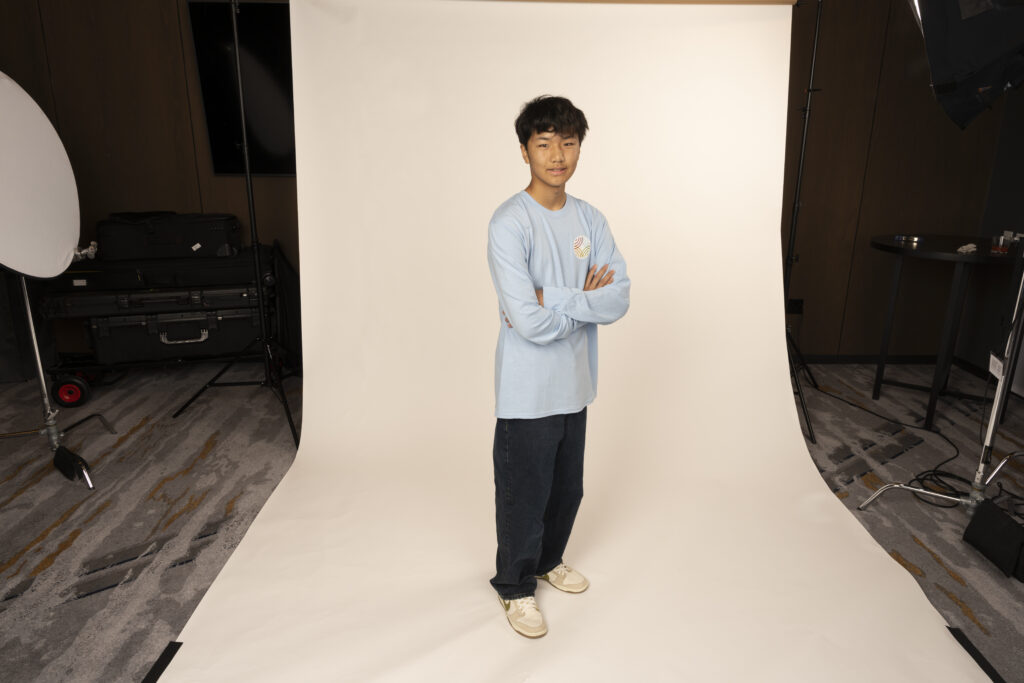
Evann’s home environment played a big role. He grew up in Silicon Valley surrounded by the influence of new technologies. He met his science fair teammates — Lucas Yen and Akhil Nagori — at Cabrillo Middle School, where they quickly became friends and encouraged each others’ interest in invention.
“Being surrounded by a bunch of like-minded peers helped inspire me to start building real-world products that can help others,” Evann said.
The idea for their invention was inspired by Akhil’s summer trip to India, where he witnessed the daily challenges of a blind relative who struggled reading braille. After he shared his experience, they began to investigate assistive technologies to turn text into speech for underserved communities. During their research, they were surprised to discover that many visually-impaired students in the U.S. also lack access to these tools.
With the local science fair approaching, they decided to team up to focus on creating an affordable assistive reading device.
Inventing through teamwork
Evann, Akhil, and Lucas each brought their individual strengths to the project: Lucas was a strong researcher, Akhil was technically proficient, and Evann excelled at prototyping.
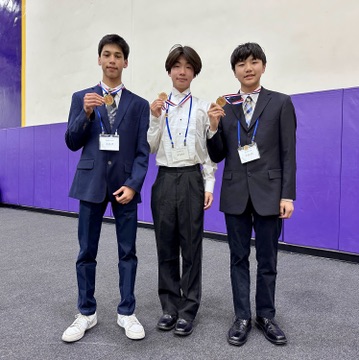
“We all came together in a good way and balanced out our weaknesses, and that allowed us to create a functional prototype,” Evann said.
But they also needed to learn that no one person had all the right answers, and how to combine their different opinions to choose a path forward.
“Creating a system where we could all find the bright spots in our ideas and create that common-ground solution that pleased all of us was challenging,” Evann said, “but it was beneficial to hear what everyone had to say before deciding on a solution.”
Along the way, they learned another fundamental invention lesson: how to fail forward.
Their eyeglasses device depended on machine learning software to convert images into text and then into audio. But during the testing of their software, they found that it was only trained to convert black-and-white text, which didn’t work for more colorful textbooks and school materials. They had to cross-train the software with color texts and a wide variety of fonts to increase its recognition accuracy.
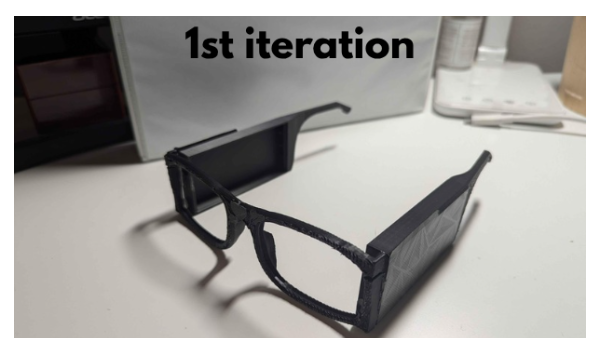
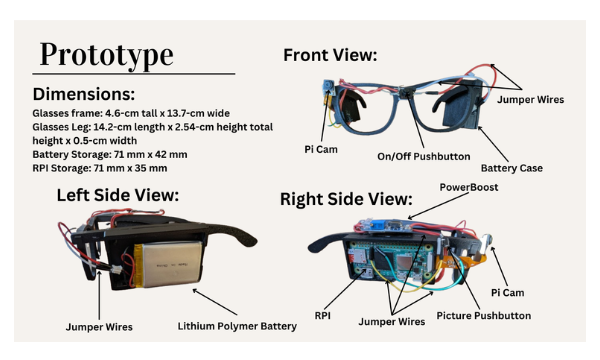
The first iteration of the Visionary glasses (left) and the final prototype (right). Photos courtesy of Evann Sun.
Another challenge was cost. They found that similar solutions could cost upwards of $1,000, which would be prohibitive for many students. To avoid this, they designed eyeglass frames that they 3D printed at Evann’s home, and found cheaper alternatives for parts like microprocessors. The final prototype included the frames, a Raspberry Pi tiny computer, miniature camera, battery, and a small pair of speakers attached to the glasses.
The total cost of their materials was under $70.
Launching to the next level
Evann, Lucas, and Akhil entered their AI text-to-speech glasses into local science fairs, advancing through competitions until they reached the national level in October 2025 as finalists at the Thermo Fisher Junior Innovators Challenge — the premier STEM research competition for middle school students in the U.S. — run by the Society for Science.
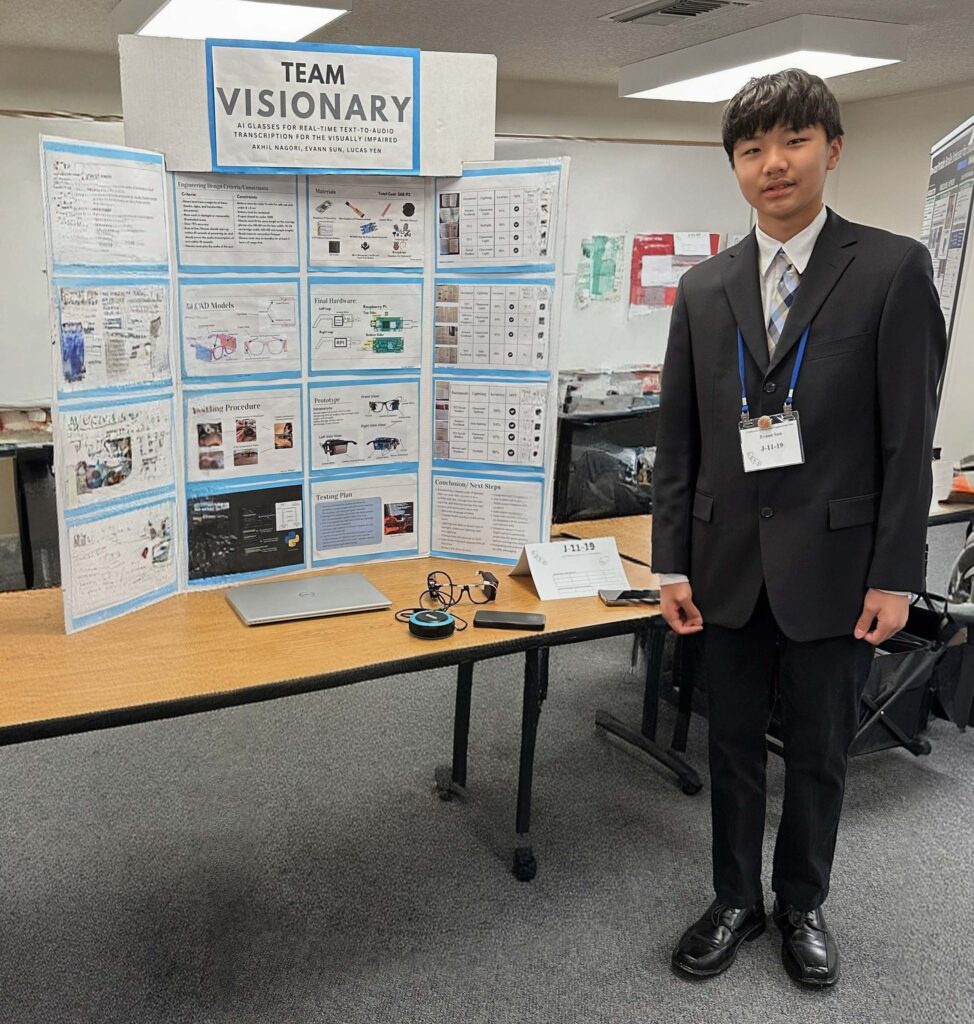
Over the course of many local and regional competitions, Team Visionary had honed their presentation and knew their project inside and out — but they still found it nerve-wracking to be on a larger, national stage.
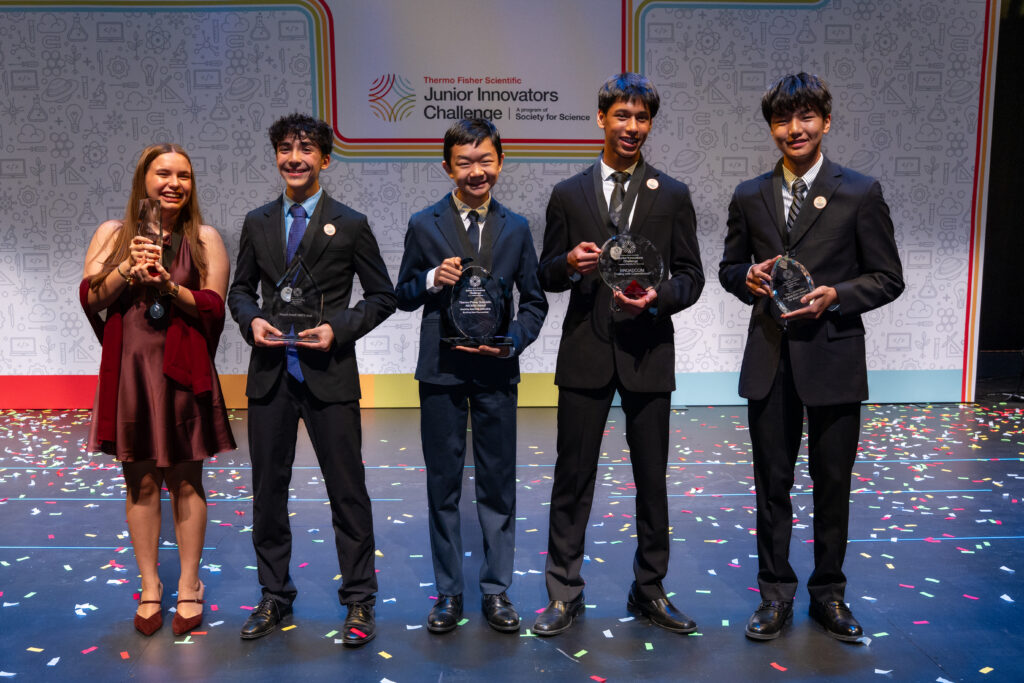
Ultimately, the project’s inventive machine learning technology and its affordability and accessibility won Evann the Lemelson Foundation Award for Invention, which recognizes students who find innovative solutions to real-world challenges that improve lives.
“Every student, regardless of visual ability, deserves equal opportunities,” he said.
That drive is inspiring him to continue to develop the team’s glasses even after the competition has concluded, and to think about what’s next for inventing and problem-solving.
Just getting started
From dreaming up Visionary with his three friends in middle school to becoming a nationally award-winning inventor in high school, Evann’s own future is starting to come into focus.
He credits the experience with inspiring him to pursue a STEM career path as a mechanical engineer, where “your work can have a meaningful impact on millions of lives,” he explained.
And he’s optimistic about the different uses of AI and its potential to positively impact the real world when combined with human ingenuity and empathy.
He returns to those inspirational words of Michael Jordan in believing in yourself to accomplish great things, combined with working with other people and with new technologies.
His advice for young inventors is to approach the world with curiosity and find challenges that are in need of innovative solutions.
“It’s really important to just keep staying curious,” he said. “Just knowing that there’s still so much out there, that’s what keeps me going.”

Important Disclaimer: The content on this page may include links to publicly available information from third-party organizations. In most cases, linked websites are not owned or controlled in any way by the Foundation, and the Foundation therefore has no involvement with the content on such sites. These sites may, however, contain additional information about the subject matter of this article. By clicking on any of the links contained herein, you agree to be directed to an external website, and you acknowledge and agree that the Foundation shall not be held responsible or accountable for any information contained on such site. Please note that the Foundation does not monitor any of the websites linked herein and does not review, endorse, or approve any information posted on any such sites.