








Cultivating the Next Generation of Invention Education Teachers
min read
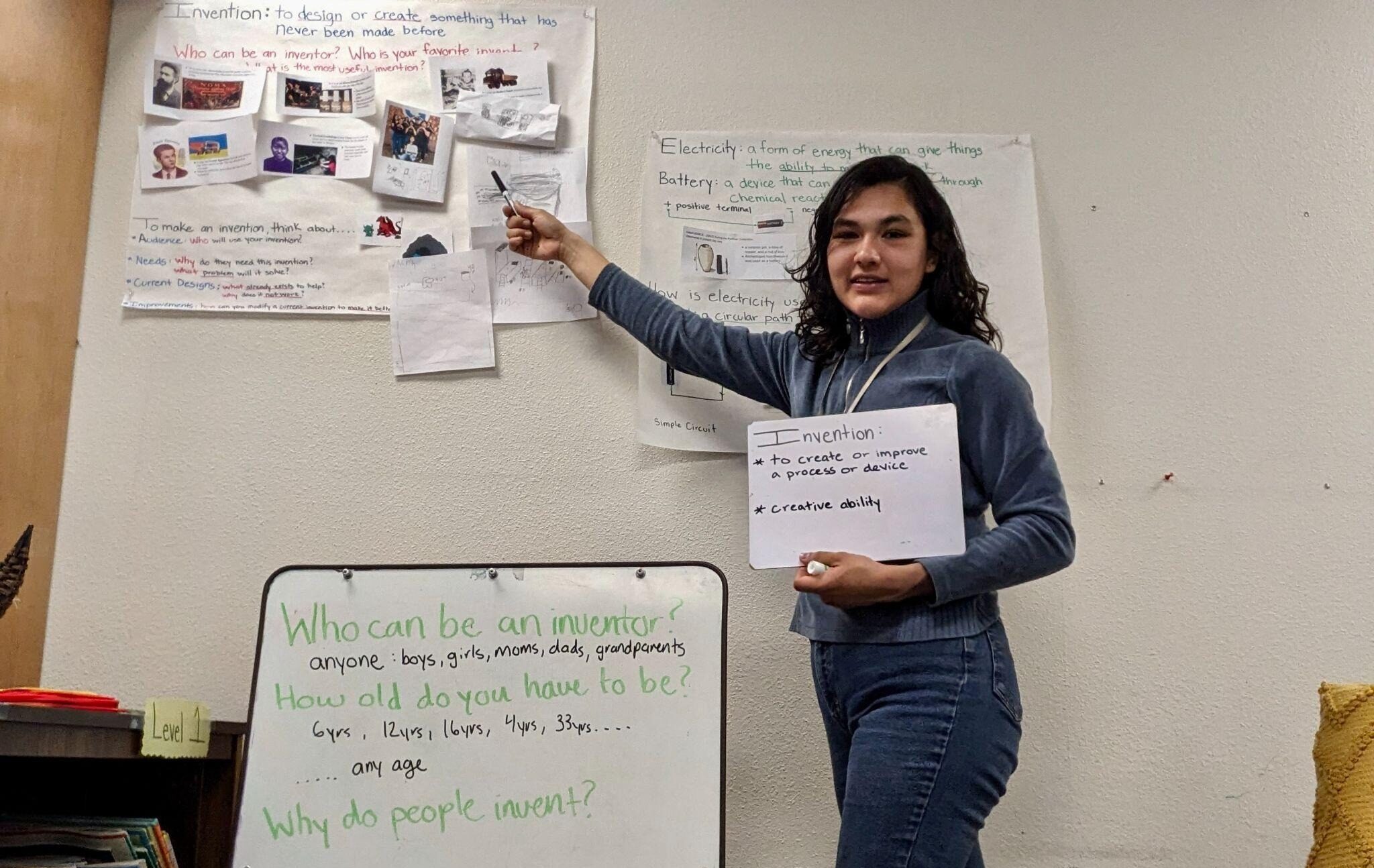
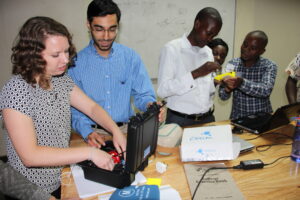
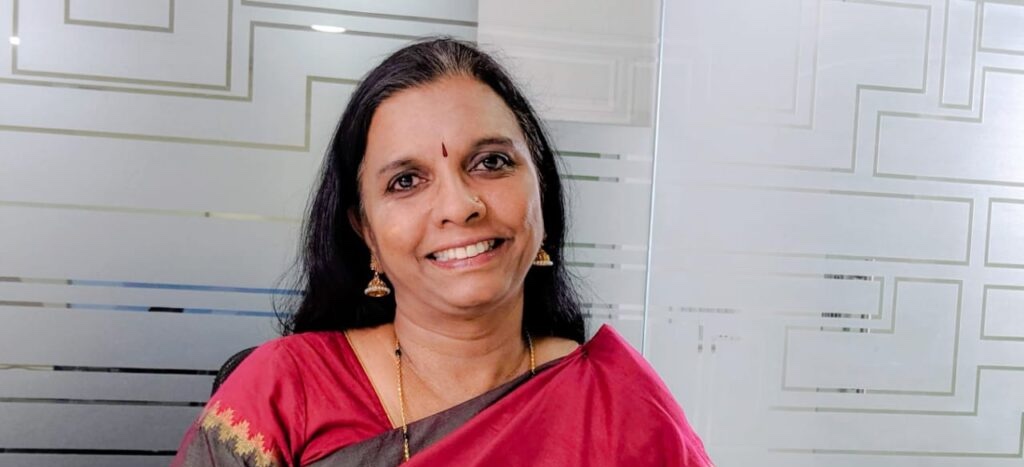
Pictured above: Katia Avila Pinedo presents at Invention Week.
Katia Avila Pinedo shares how her invention education journey inspired her to become a teacher.
“Do you want to invent?” a flyer on Snapchat asked high school student Katia Avila Pinedo in 2017.
Katia had never asked herself that question before, but she realized that her answer was a resounding “Yes!” That’s how she made the life-altering decision to join the Garey High School InvenTeam that the flyer was advertising. It was part of a Lemelson-MIT (LMIT) program where students invent real-world solutions to problems of their choosing.
That was nearly 10 years, one patent, and a college graduation ago. Today, every time the 23-year-old teaches a class or gives a talk, she thinks about the invention question and asks herself: “How can I convince someone to just give it a shot?”
Planting the seeds of invention
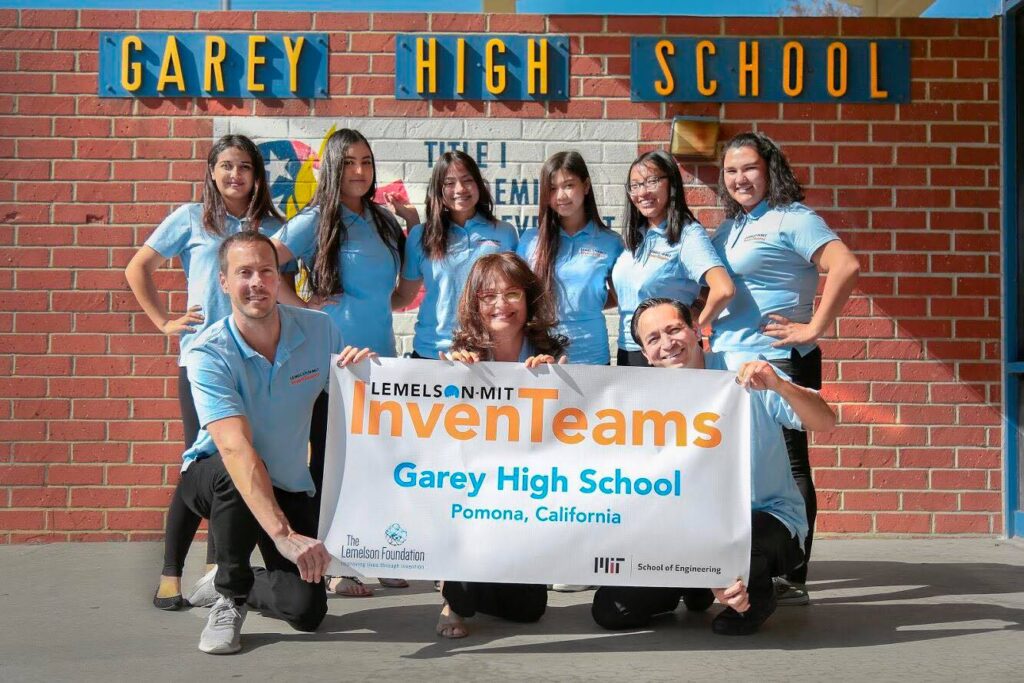
It was sitting in science teacher Antonio Gamboa’s classroom where Katia first felt like she could be an inventor. But her creativity was also influenced by the cultural richness of her hometown.
She describes Pomona, California, in Los Angeles County as rich in art, Spanish colonial history, and citrus fields. The populations of both Pomona and her school are made up predominantly of Hispanic and Asian immigrant families.
Her classmates on the InvenTeam represented the cultures of five countries, including Guatemala, Mexico, Vietnam, Nepal, and the Philippines. Katia and her InvenTeam would become trailblazers at Garey High School. At the time, the school didn’t offer engineering classes or clubs. Their science teacher Mr. Gamboa had sponsored science fairs, but he worried that inventing might be out of reach for his students.
It was the enthusiasm of Katia and her classmates that convinced him.
“Their immediate response and level of engagement when they started thinking ‘I can invent something’…that got my attention,” he recalls.
From the start, their team was motivated to invent a device to help a teammate’s grandfather who struggled with diabetes and diabetic neuropathy — the latter, a type of nerve damage that most often affects the legs and feet of people with diabetes. They eventually settled on inventing a monitoring device to help alert patients, healthcare providers, and caregivers before symptoms such as pain, lesions, or numbness progress.
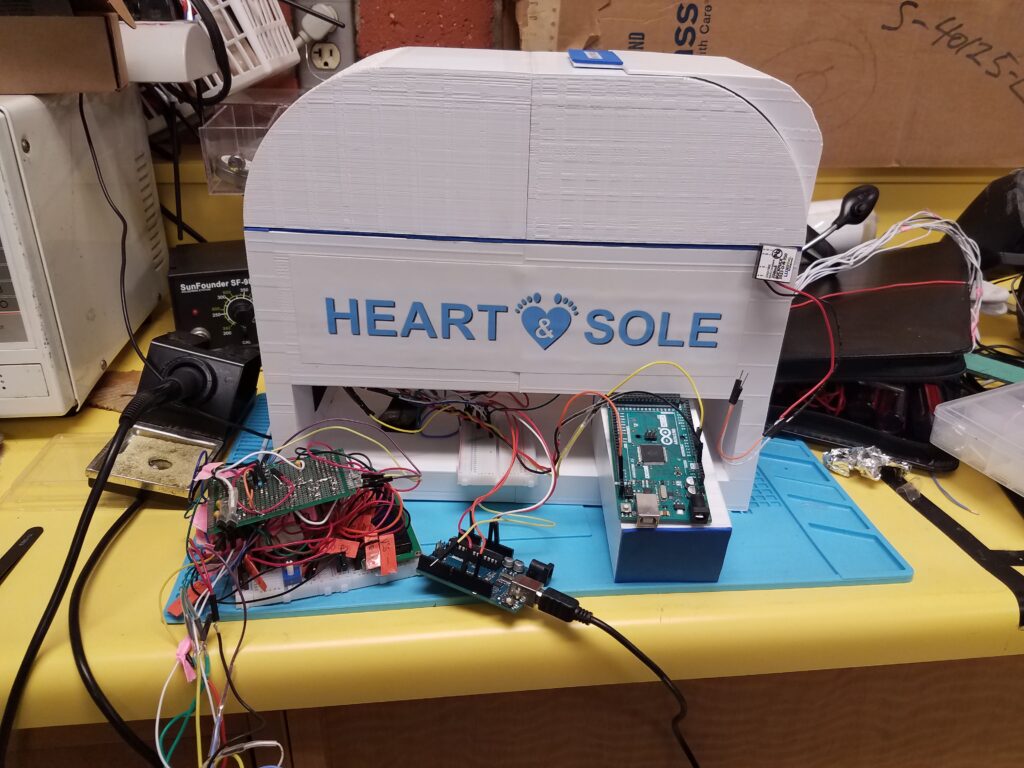
The invention process challenged Katia and her teammates and stretched their abilities in different ways. They had to learn how to integrate sensors into their device, and when faced with roadblocks, how to pivot and redesign.
Their community also supported the team in several ways. This meant teachers letting the InvenTeam students stay at lunch longer or leave class early to work on their invention. Others offered extra credit to those who volunteered for the team’s community showcase, an event that helped them fund their trip to MIT for the EurekaFest event, where InvenTeams from across the country demonstrate their inventions.
And it wasn’t just the school that showed up. La Nueva Voz, the local bilingual newspaper run by just two people, covered the team’s story and helped get the word out about the showcase. Through Lemelson-MIT, the students were paired with a STEM enrichment center for guidance during their invention journey.
After persevering and lots of hard work, the students had a prototype, which they named “Heart & Sole” — a reference to their focus on foot health, and the commitment that the entire team made to the project. They made it to MIT with funding from their community, and presented their invention at Lemelson-MIT’s 2018 EurekaFest.
But that wasn’t the end of the story.
From prototype to patent
After EurekaFest, their LMIT mentors connected them to the Microsoft #MakeWhatsNext Patent Program. They received pro bono legal support and funding to apply for a patent on their invention.
They knew that the process of applying for a non-provisional utility patent — which is more complex than for a provisional patent — would take time, and Mr. Gamboa promised to continue the effort as the team members graduated and went on to college.
Katia decided to study Networks and Digital Technologies at the University of California, Santa Cruz, and planned for a career in the tech sector.
On July 22, 2022, she and her teammates were awarded U.S. Patent No. 11,382,564, five years after they first made the decision to invent and form their InvenTeam. It was particularly powerful news for her parents.
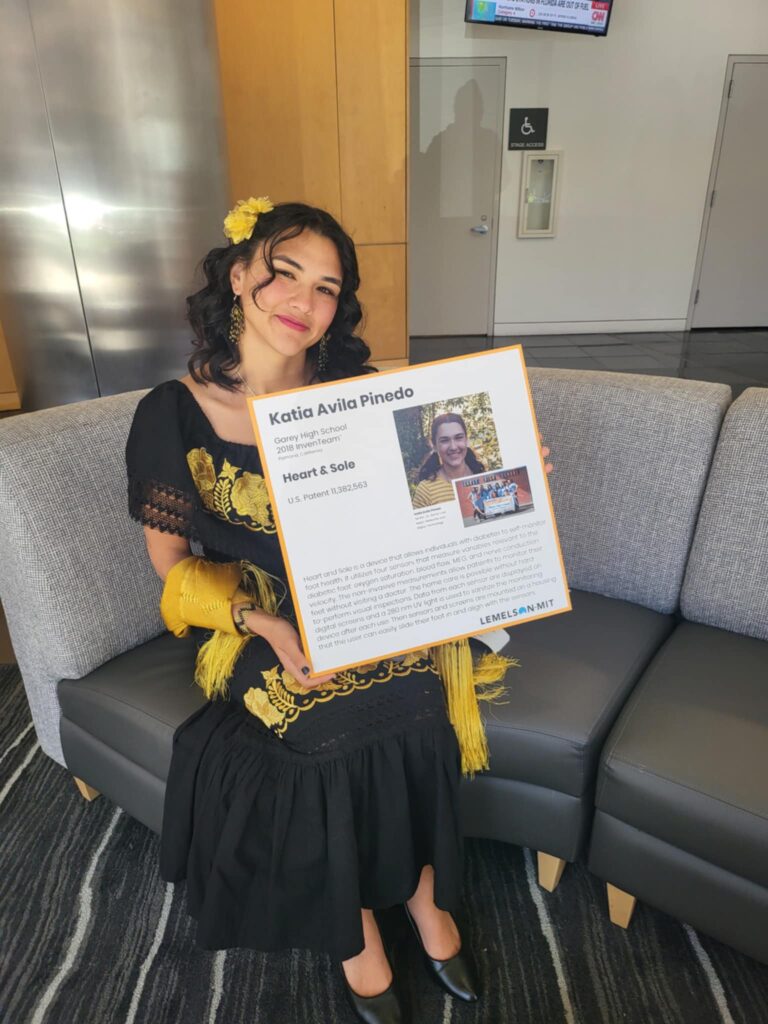
“I realized at that moment, never in my parents’ mind would they have thought their daughter would be an inventor and get a U.S. patent,” she explained. “They made a lot of sacrifices, being an immigrant family, and worked really hard.”
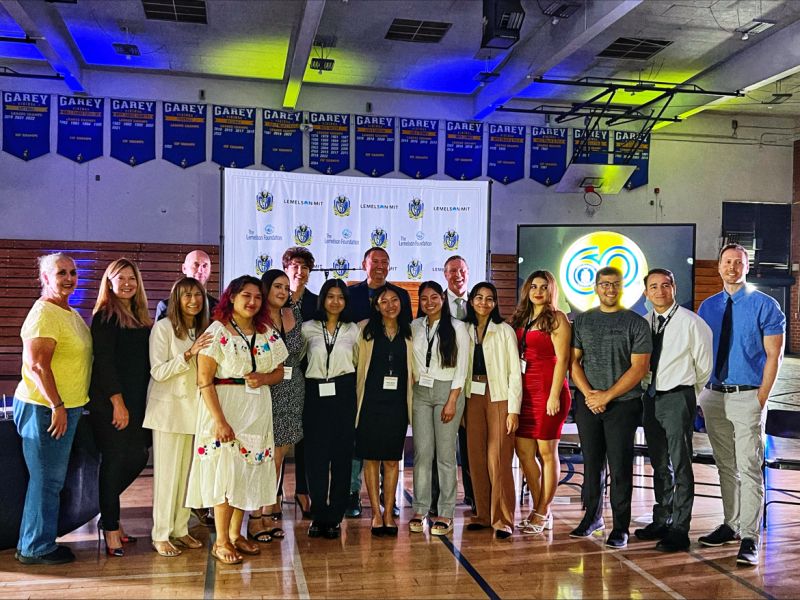
Her school and community came together to celebrate their accomplishment with a “patent party” that included local tacos and current high school students showcasing their invention projects.
The event reunited Katia with her teammates and Mr. Gamboa, and it was attended by their families, local city council members, Microsoft patent attorney Dan Choi, and even the director of the U.S. Patent and Trademark Office (USPTO) at the time, Kathi Vidal.
“It was rewarding to come back to where it all started,” Katia said.
They were also able to see the ripple effects of what they had started, which was another type of reward: Garey High School had embraced invention education, fueled by their experiences and Mr. Gamboa’s classroom.
“Most of his classes had some sort of invention curriculum, at least once weekly,” she said about Mr. Gamboa. “And at that point, he was the head of the science department, and he encouraged other teachers to bring invention education curriculum into their classrooms.”
From student to teacher
For Katia, the long-term impact of her invention experience was realizing that she liked the learning process. In college, she followed that passion by working as a tutor, peer mentor, and instructor for various invention education activities for younger students, like the UCSC MESA Engineering Program and Lemelson-MIT’s “Rail Innovation in Action” online program. She’s also spoken about her invention journey at the USPTO’s National Summer Teacher Institute.
She stayed in touch with Mr. Gamboa, whom she’d run into at conferences. At one invention education conference, she spoke to him about how she was having challenges at college, and was considering leaving school. With his extra push, she persevered, and graduated with honors in her major. Then, like most graduating college students, she had to figure out what was next.
“I was thinking, I have this STEM degree, this computer networks degree, but I really love education and art,” Katia said.
Like her mentor, she decided to become a teacher. At The dA Center for the Arts in her hometown, she teaches mariachi violin, and she puppeteers for a Head Start program geared toward 3-year-olds.
And she’s still thinking about inventing in her teaching. She recently created a prototype of an octopus puppet for her class, drawing on her mechanical engineering knowledge and her creativity.
To Katia, once you unlock that inventor’s mindset, it’s possible to be an inventor in any discipline. This way of thinking freely and creatively — the hallmarks of invention education — is one that Miss Kat (as her students call her) hopes to share with her class, and inspire them to follow their interests.
“That’s why I like being a teacher,” she said. “Because I feel like it’s my way of giving back for all that I’ve gotten.”

Important Disclaimer: The content on this page may include links to publicly available information from third-party organizations. In most cases, linked websites are not owned or controlled in any way by the Foundation, and the Foundation therefore has no involvement with the content on such sites. These sites may, however, contain additional information about the subject matter of this article. By clicking on any of the links contained herein, you agree to be directed to an external website, and you acknowledge and agree that the Foundation shall not be held responsible or accountable for any information contained on such site. Please note that the Foundation does not monitor any of the websites linked herein and does not review, endorse, or approve any information posted on any such sites.